

What is the circular economy?
What if we changed the way we look at waste? Instead of something to throw away, we’d ask ourselves, “Does this still have value? Can it be repurposed?”
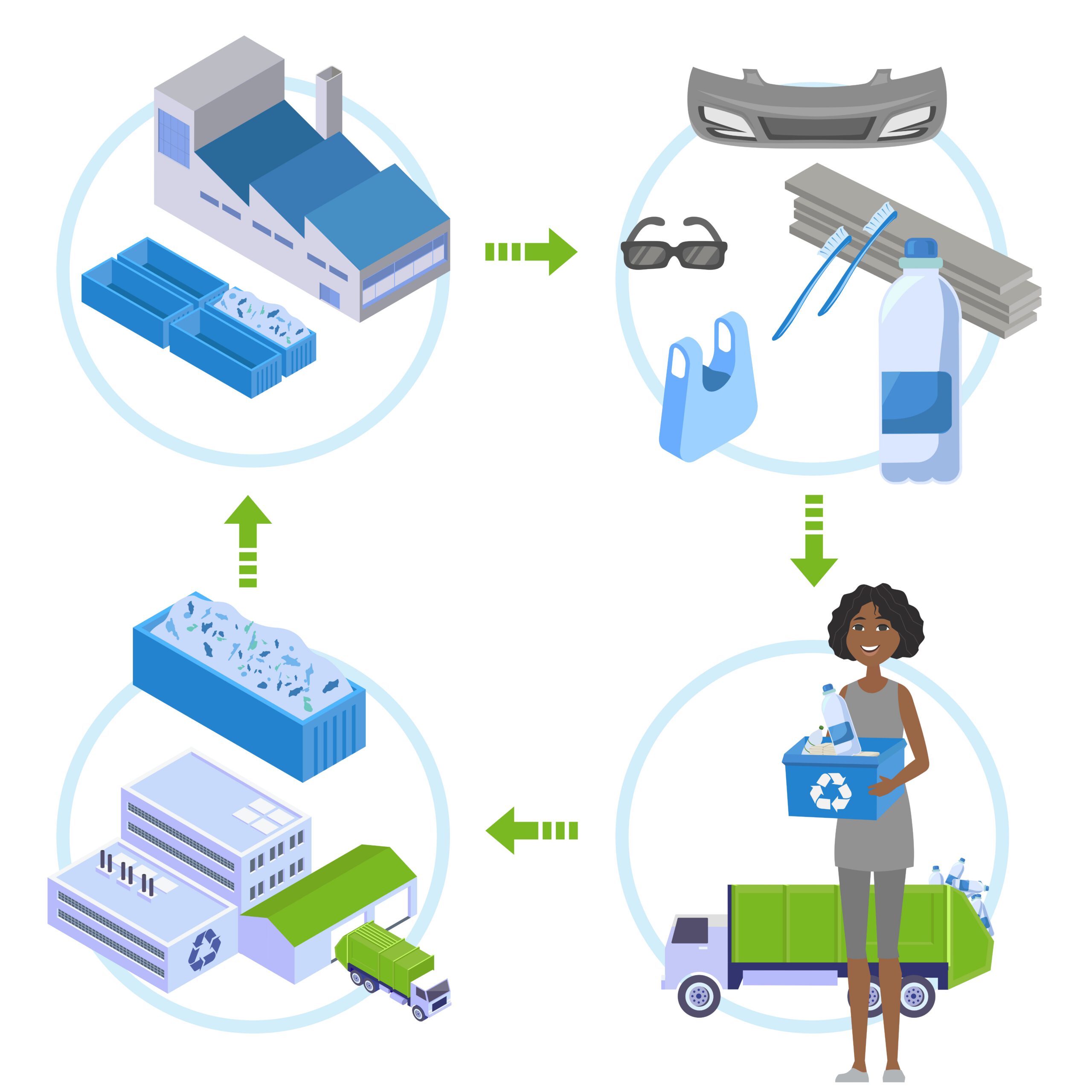
That’s the idea behind the circular economy. Instead of using and throwing things away, the precious resources that go into everyday items like water bottles, lightbulbs and tires are given a second life in new items.
Ontario is making a shift towards a circular economy by introducing laws that make businesses responsible for collecting and recycling the products and packaging they sell once consumers are finished with them. This system is called extended producer responsibility or EPR.
EPR is a driver of the circular economy by:
- Making businesses fully responsible for the cost and operations of Ontario’s recycling programs
- Setting enforceable requirements and targets for recycling
- Establishing a regulatory body to oversee the proper collection and recycling of materials
The Resource Productivity and Recovery Authority (RPRA) is the regulator responsible for enforcing Ontario’s circular economy laws and making sure businesses fulfill their recycling requirements.
The key goals of this shift to a circular economy are to:
- increase recycling by making it easier and more accessible for consumers
- reintegrate valuable resources into manufacturing
- use less raw materials by reimagining product and package design
- reduce waste going to landfill
What can you, as a consumer, do to keep the circular economy in motion?
A great place to start is to know which items can be recycled and how you can recycle them!
In Ontario, you can put things like empty food containers and packaging into your Blue Box at home. Learn more about the program.
There are also many items that don’t belong in your Blue Box but can still be recycled across the province. Things like batteries, tires and household cleaners can be dropped off for free at a recycling location near you.
Use the Where to Recycle Map to learn where you can drop off used materials like:
- Batteries
- Car and engine oils
- Electronic devices and cords
- Lightbulbs
- Tires
- Household cleaners
- Paints and stains
- Pesticides
- Propane containers